

The End of Programming As We Know It

Tim O’Reilly—founder of O’Reilly Media and one of the most influential voices in tech—argues we’re not witnessing the end of programming, but the beginning of something far bigger. He draws on past computing revolutions to explore how AI is reshaping what it means to build software, why real breakthroughs come from the edge—not incumbents—and what it takes to learn, teach, and build responsibly in the age of AI.
Tim O’Reilly—founder of O’Reilly Media and one of the most influential voices in tech—argues we’re not witnessing the end of programming, but the beginning of something far bigger. He draws on past computing revolutions to explore how AI is reshaping what it means to build software, why real breakthroughs come from the edge—not incumbents—and what it takes to learn, teach, and build responsibly in the age of AI.
Guest
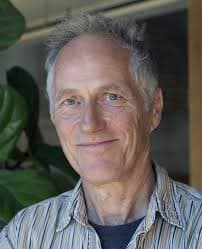
Tim O'Reilly
Founder, Chairman, and CEO at O'Reilly Media
Key Takeaways
📚 Programming isn’t ending—it’s evolving.
Tim compares today’s AI-driven shift to past revolutions like compilers and interpreters. Each abstraction layer widened access and creativity. AI is the latest layer—expanding who can build, not eliminating the need to build.
🔧 AI makes more things buildable by more people.
From high schoolers prototyping medical tools to solo creators making films, Tim emphasizes that democratization—not displacement—is the dominant trend.
🕸 The real breakthroughs won’t come from the center.
Just like Google wasn’t AOL and Amazon wasn’t Barnes & Noble, the next AI era will be shaped by decentralized players. Tim points to efforts like DeepSeek as early signals of where true innovation is happening.
🏗 We need a new architecture of participation.
Inspired by UNIX and the open web, Tim calls for a modular, interoperable AI ecosystem—an “architecture of participation” where AIs cooperate, negotiate, and share knowledge, rather than compete behind closed APIs.
🛠 The future of software engineering is systems thinking.
LLMs won’t erase the need for engineering—they’ll change the job. From “vibe-driven coding” to debugging AI agents, tomorrow’s engineers will orchestrate systems, define interfaces, and evaluate outcomes.
📊 Organizations must become learning machines.
Ambient learning isn’t optional. Tim urges teams to share what’s working, experiment in public, and treat learning as a continuous strategic asset—not an afterthought.
🧭 Think in vectors, not snapshots.
Use directional trends to shape strategy—watch for acceleration, not just dominance. Tim urges leaders to track where things are going, not just where they are.
You can read the full transcript here.
00:00 The Evolution of Programming: From Compilers to AI
01:49 Introducing Tim O'Reilly: A Visionary in Technology
02:19 AI's Impact on Programming and Development
07:15 The Democratization of Technology and Creativity
15:02 The Future of AI and Decentralization
26:48 The Changing Landscape of Software Development
39:40 The Commoditization of Power and Recycled Intelligence
40:11 The Evolution of O'Reilly and Education
41:07 Teaching Generative AI and Overcoming Learning Hurdles
42:18 The Unix Experience and Learning by Doing
43:41 AI as a Tool for Non-Programmers
45:25 The Fragility of Software and Technical Debt
46:40 The Importance of Passion Projects in Learning
48:36 Organizing Time for Learning in Chaotic Environments
53:34 The Future of AI: Decentralization and Architecture of Participation
01:02:26 AI Governance and Communication Protocols
01:05:00 The Role of Cloud Infrastructure in AI Safety
01:17:40 The Future of Jobs in an AI-Driven World
01:21:43 Final Thoughts and Practical Advice
Ready to unleash your data?
Discover how Delphina can transform your data science.